
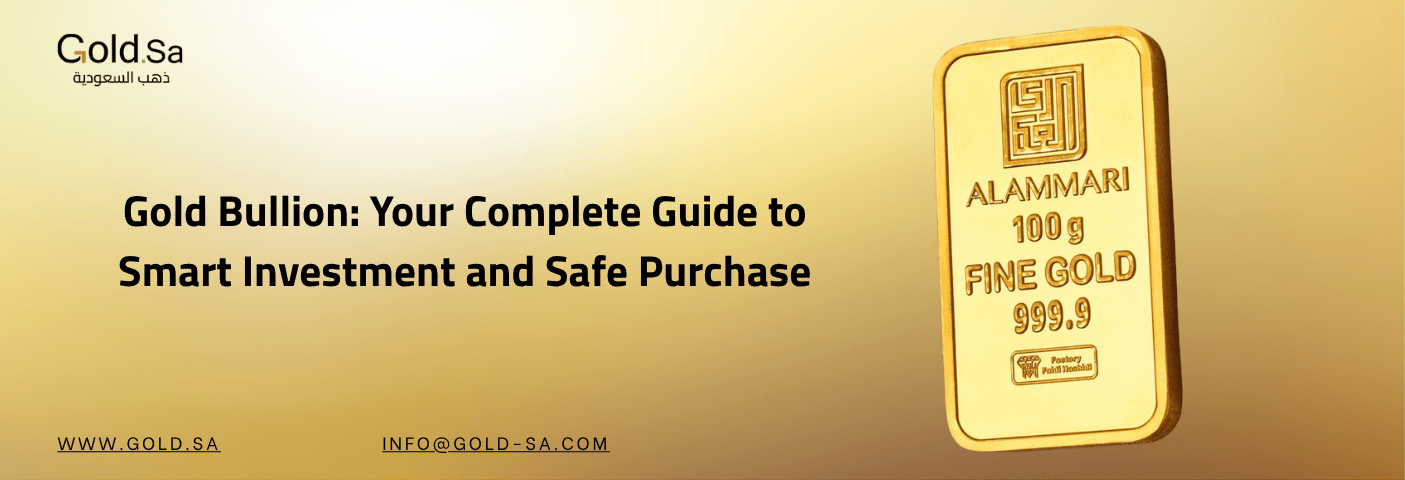
Gold Bullion: Your Complete Guide to Smart Investment and Safe Purchase
Gold bullion is one of the most reliable savings and investment tools, combining security with long-term value stability. With diverse options and daily price fluctuations, the world of bullion may seem complex to some.
This guide will help you understand the factors that influence bullion prices, how to choose the right type and weight, and identify the most popular brands traded in Saudi Arabia. It also explains how to verify the authenticity of a bar. Whether you are a beginner investor or looking to strengthen your gold portfolio, you will find here everything you need to make confident and well-informed decisions.
What Is Gold Bullion?
Gold bullion refers to rectangular or square bars made of pure gold, primarily used for investment or savings purposes. Unlike ornamental gold, bullion is distinguished by its purity, often at 24 karats, which makes it soft and unsuitable for daily wear.
Types of Gold Bullion
Gold bullion types differ based on their manufacturing method. There are two main processes: casting or minting. Bullion can also be produced in different purities (24K, 22K, 21K, 18K) depending on the percentage of raw gold in the piece. Additionally, bullion comes in rectangular or circular shapes, with weights ranging from 1g to 12.4kg. They can be classified as follows:
- Bullion by manufacturing method
- Bullion by karat and purity
- Bullion by shape
Bullion by weight
1. Gold Bullion by Manufacturing Method
Gold bullion is produced either by direct casting into metal molds or by pressing the metal into a specific shape using precision machines.
Cast Gold Bars: Cast bullion is made by pouring molten gold into special molds, where it solidifies and takes the mold’s shape.
- Manufacturing steps:
- Melting raw gold at high temperature
- Refining impurities
- Pouring into molds of a specific size and shape
- Cooling until solidified
- Finishing by trimming excess and smoothing the surface
- Features:
- Lower production cost
- Available in larger sizes (1g up to 1kg and beyond)
- Commonly used by banks, central reserves, and large investors
Minted Gold Bars: Minted bullion is produced by casting molten gold into molds, cutting into uniform sizes, then pressing it with hydraulic machines to achieve precise shapes. Logos, purity, weight, and serial numbers are engraved.
- Manufacturing steps:
- Casting raw gold into initial plates
- Heating and softening plates
- Cutting into rectangular or square pieces of exact weight
- Surface finishing and engraving details (purity, weight, hallmark, serial number)
- Features:
- High quality and precise weight
- Easy to store and transport
Widely accepted in markets due to engraved standards and serial numbers
2. What Is The Difference Between Cast Gold Bars and Minted Gold Bars?
Minted bullion is more expensive than cast bullion due to higher production quality. Cast bullion premiums range from 0–1% above spot price, while minted bullion premiums range from 1–2% for large bars (1kg) and 4–6% for smaller bars (e.g., 6g).
⧫ Track live gold prices instantly with Gold.sa ⧫
Seize the opportunity to buy your gold bullion bar at the best market price.
3. Gold Bullion by Karat and Purity
Gold bullion is classified into four main types based on raw gold content: 18K, 21K, 22K, and 24K.
- 24K Gold Bars (999): Highest purity (99.9% gold), weights from 1g to over 1kg, used in banking reserves and investments.
- 22K Gold Bars (916): 91.6% gold + 8.4% other metals (copper, silver). Common weights 10g–100g. Popular in jewelry across the Gulf, Middle East, and India, and as investment bullion in countries like the UK and UAE.
- 21K Gold Bars (875): 87.5% gold + 12.5% other metals. Rarely used as bullion, mostly in jewelry. Less favored for investment due to lower purity.
- 18K Gold Bars (750): 75% gold + 25% metals (copper, nickel, palladium). Not used for investment bullion, mainly for jewelry due to its durability.
⧫ Monitor gold prices with manufacturing cost directly on Gold.sa ⧫
Buy your gold bullion bar at the right time to maximize value and investment returns.
4. Gold Bullion by Shape
Four common shapes exist: rectangular, circular, oval, and structural. Each has typical weights and uses:
Shape | Common Weight | Uses |
| Rectangular | 1g–1kg | Direct investment, banking reserves |
| Circular | 1g–1kg | Jewelry, gifts, collections |
| Oval | 1g–100g | Jewelry, luxury gifts |
| Structural | 5g–100g | Decorative, collectible, luxury jewelry |
? Investment Tip: Rectangular 24K bullion remains the best choice for investors seeking real value and high liquidity.
5. Gold Bullion by Weight
Bullion is classified into small, medium, and large categories, each with different premiums above spot price:
Category | Common Weight | Premium Above Spot | Uses |
| Small | 1–50g | High (5–15%) | Small investments, gifts |
| Medium | 100–250g | Moderate (3–8%) | Individual wealth reserves |
| Large | 1–12.5kg | Low (1–3%) | Banking investments, government reserves |
The heavier the bar, the lower the premium and the higher the long-term investment value.
6. Most Popular Gold Bullion Karats in Saudi Arabia
The most common bullion karats in Saudi Arabia are 18K, 21K, 22K, and 24K.
- 24K: Preferred for investment and wealth preservation due to 99.9% purity. Available in multiple weights.
- 22K: 91.67% purity, favored for luxury gifts and investment.
- 21K: Most traded due to affordability and 87.5% purity. Common in small and medium bars.
18K: 75% purity, durable and cheaper, widely used in modern jewelry but less suitable for investment.
7. Main Uses of Gold Bullion
The primary uses of gold bullion include investment, jewelry manufacturing, interior design, medical and electronic industries, and hedging against geopolitical crises and inflation. Gold bullion is also widely used in central bank reserves and government holdings to stabilize national currencies and preserve wealth.
- Investment: Long-term wealth preservation, safe haven during crises. 24K bars are most common.
- Jewelry Manufacturing: Widely used in 21K and 18K jewelry, mixed with metals for color variations (yellow, rose, white).
- Interior Design: Used in luxury decorations, gilded ceilings, ceramics, and glass.
- Medical & Electronics: Applied in pacemakers, surgical tools, and electronic circuits due to corrosion resistance and conductivity.
- Hedge Against Inflation & Crises: Easily liquidated during currency devaluation or geopolitical tensions.
- Government & Central Bank Reserves: Large bullion holdings (especially 400-ounce bars) stabilize national currencies.
The United States holds the world’s largest reserve at 8,133.5 metric tons, according to IMF data.
Advantages of Investing in Gold Bullion
The advantages of investing in gold bullion lie in the ability of this precious metal to preserve its value over time. Gold offers global liquidity, protection against inflation and crises, and is distinguished by its high purity, diverse weights, safe storage options, and direct ownership without intermediaries. It is considered an ideal choice for portfolio diversification and, in some countries, tax exemptions.
1. Long-Term Value Preservation:
- Pure gold maintains purchasing power across decades, retaining value despite economic fluctuations.
- During inflationary periods, gold prices rise, acting as a shield against currency devaluation.
2. Superior Liquidity:
- Bullion can be easily converted into cash worldwide through banks or licensed gold dealers.
- Bars certified by renowned refineries (e.g., PAMP, Perth Mint) sell faster due to global standards.
3. Guaranteed Purity and High Quality:
- Bullion is produced at 99.99% purity (24 karats), stamped and certified for weight and fineness.
- Some global refineries (e.g., Argor-Heraeus) offer ultra-pure bullion at 99.999% for advanced investment.
4. Strategic Portfolio Diversification:
- Gold often moves inversely to stocks and bonds, making it an ideal balancing tool.
- Experts recommend allocating 5–15% of a portfolio to gold as a hedge against risk.
5. Safe Haven During Crises:
- In times of war, pandemics, or market collapse, investors turn to pure gold as a secure store of value.
- Example: Gold prices rose more than 25% during the COVID-19 pandemic (2020).
6. Passive Investment Requiring Minimal Monitoring:
- Gold does not require daily management like stocks or real estate.
- It can be stored for years without concern for short-term volatility.
7. Variety in Weights and Designs:
- Bullion ranges from 1 gram (for small savers) to 400 ounces (for major investors).
- Some bars feature artistic designs (e.g., PAMP Fortuna), combining aesthetic and investment value.
8. Safe and Easy Storage:
- Options include home safes (for small weights), bank vaults (for larger holdings with insurance), and dedicated gold accounts (e.g., Dubai Islamic Bank).
9. Direct Ownership Without Intermediaries:
- Investors physically own bullion, unlike paper gold ETFs that rely on third parties.
- Bullion is free from credit risk compared to futures or other financial instruments.
10. Tax Exemptions in Some Countries:
- Nations such as the UAE, Switzerland, and Singapore offer tax-free physical gold purchases.
In Saudi Arabia, no taxes are currently imposed on bullion trading.
Factors Affecting Gold Bullion Prices in Saudi Arabia
Gold prices in Saudi Arabia change daily based on the global ounce price and market conditions of supply and demand. Additional factors such as manufacturing costs, taxes, and purity levels also influence the final price. The higher the purity, the more expensive the bullion becomes.
- Global Gold Price: The price of bullion is directly affected by the global ounce price, which changes daily. Prices fluctuate instantly in international markets such as NYMEX and LME.
- Supply and Demand: Market conditions, such as increased demand for jewelry or investment bullion, can drive prices higher.
- Additional Costs: Bullion prices may include extra costs such as manufacturing, shipping, and taxes (if applicable).
- Bullion Purity: High-purity bullion (e.g., 99.9%) is more expensive compared to lower-purity bars.
How to Choose the Right Gold Bullion?
Choosing the right bullion depends on your purpose (investment, hedging, or gifts). Select the type and weight accordingly, ensure your bullion comes from a trusted source such as global refineries (PAMP or Perth Mint), verify purity and official documentation, compare prices carefully, and store your bullion securely.
1. Define Your Purpose:
- Long-term investment: Large bars (100g and above)
- Crisis hedging: Medium bars (10–50g)
- Gifts: Small decorative bars (1–5g)
2. Choose the Right Type:
- Cast Bars: Best for large investments, lower cost, available in big weights (1kg and above).
- Minted Bars: Best for individual investors, attractive design, available in small and medium weights (1oz–100g).
3. Verify Source and Brand:
- Top global refineries: PAMP Suisse (Switzerland), Perth Mint (Australia), Valcambi (Switzerland), Heraeus (Germany).
- Quality marks to look for: refinery stamp, serial number, purity certificate.
4. Check Bullion Specifications:
- Purity: Look for 999 (24K) bullion; avoid pieces below 995.
- Weight: Most liquid weights are 1g, 5g, 10g, and 1oz (31.1g). For larger investments: 100g, 1kg.
5. Compare Prices and Premiums:
- Price = global gold price + manufacturing premium + shipping/insurance.
- Manufacturing premiums usually range from 1–5% above spot price.
- Larger bars have lower premiums; smaller bars have higher premiums.
Tip:
- Large gold bars have lower manufacturing premiums.
- Small gold bars have higher manufacturing premiums.
6. Choose Trusted Sources:
- Reliable purchase points: banks selling bullion, licensed gold dealers, certified gold exhibitions.
- Warning: Avoid unknown sources and suspiciously cheap offers.
Warning:
- Avoid buying from unknown sources.
- Be cautious of offers that seem too cheap.
7. Store Bullion Safely:
- Home safes (for small weights).
- Bank vaults (for large holdings, with theft insurance).
- Some banks offer secure gold storage services.
Important Tips When Buying:
- Request an official purchase invoice.
- Ensure a warranty certificate is included.
- Keep all documents safe.
- Learn how to detect counterfeit gold.
How to Know if a Gold Bar Is Authentic?
An authentic gold bar is stamped with a distinctive hallmark, feels heavy for its size due to gold’s density, does not attract magnets, and its color cannot be altered by acids or heat.
You can verify the authenticity of your bullion through the following tests:
- Visual Test:
- Color: Real gold has a bright yellow shine. If the color looks dull, grayish, or bronze-like, it may be fake.
- Weight: Genuine gold is very dense, so the bar should feel heavier than it appears.
- Magnet Test:
- Gold is non-magnetic. If the bar is attracted to a magnet, it is not real gold.
- Scratch Test:
- Scratch the bar against the glass. If it leaves a yellow mark, it is likely gold.
- Acid Test:
- Use a gold acid testing kit, lemon juice, or vinegar. Place a drop on the bar; if the exposed area changes color, the bar is counterfeit.
- Check Hallmarks:
- Look for purity marks such as 24K or 999, along with other engravings like the manufacturer’s name, weight, and a unique serial number.
- Consult an Expert:
- If unsure, take your gold bar to a professional jeweler or bullion expert for verification.
Remember: some of these methods require experience or special tools, so consulting an expert is often the most reliable option.
Most Popular Gold Bullion Brands in Saudi Arabia
The most popular bullion brands in Saudi Arabia include Swiss bars such as PAMP, Metalor, and Credit Suisse, along with BTC and SAM bars. All are known for high purity and excellent quality. Swiss bullion is especially favored by investors because it is globally certified, easy to resell, and widely available at major gold shops and online platforms in the Kingdom.
- Masag Bullion: Masag produces 24K gold bars (999.9 purity) with precise weight and shape. Available in sizes from 1g to 1kg, they are suitable for both investment and savings. Masag bars are known for quality, modern manufacturing techniques, and easy trading.
- SAM Bullion: SAM bars are also 24K gold with 99.99% purity. They feature high-quality manufacturing and elegant designs, often used for long-term investment or luxury gifts. Their reputation is strong among investors due to purity and stable value.
- Swiss Bullion (Valcambi – PAMP Suisse): These global brands are renowned for superior quality and 999.9 purity. Each bar is stamped with a serial number and certificate of origin, making them internationally recognized and easy to sell worldwide.
Each brand has its advantages, but all are considered safe and reliable investment options.
Conclusion
Choose the bullion that fits your investment goal, focus on high purity, and always buy from trusted sources with authenticity certificates. Compare prices across reliable platforms, and keep invoices and certificates to secure your investment.
⧫ Gold karat prices at your fingertips, updated every moment ⧫
Seize the opportunity to invest in gold today!
Frequently Asked Questions (FAQ)
1- What is the difference between Saudi and Swiss gold bars?
Saudi bullion differs from Swiss bullion in price, place of manufacturing, and packaging. However, both are identical in quality and purity (24 karats). Swiss bars are usually more expensive due to higher printing and packaging costs in Switzerland.
2- Are gold bars subject to VAT in Saudi Arabia?
24K gold bars are exempt from value-added tax (VAT) in Saudi Arabia. Only lower-karat bullion (18K, 21K, 22K) is subject to VAT.
3- Are there customs duties on gold bars in Saudi Arabia?
There are no customs duties on gold bullion in Saudi Arabia, whether imported from abroad or sold within the Kingdom.
4- Where can I buy gold bars in Saudi Arabia?
Gold bullion can be purchased in Saudi Arabia from specialized online gold retailers such as Al-Saab Jewelry, traditional gold shops, and certain banks, including Al Rajhi Bank and Saudi National Bank (SNB).
This educational material was produced in line with Gold.sa's digital publishing standards, to provide an accurate, accessible reference on gold for researchers and readers — without offering any investment guidance or financial advice to buy or sell assets.
Publishing Policy & Content Standards